
The word that stops conversations before they start
May 26, 2026
The word burnout has become almost impossible to say out loud, and that's become its own problem.
I keep having two versions of the same conversation:
The first is with people who are clearly exhausted, operating on fumes, and privately relieved when someone names what they're experiencing. But the really sad part is when they feel like they can never actually say it at work. Because saying it feels like confessing to something. Like becoming visible in a way that might cost them. They worry it signals they can't keep up. Or that they're on their way out. Risky in this climate of forever layoffs. So they stay quiet and try to keep performing.
The second is with leaders who care about their people, genuinely, but who still react to the word burnout like it's a liability signal. Like the conversation that follows is one they're not sure they can handle. And some of them are quietly burned out themselves, which makes it even harder to disentangle the response for the reality.
But the silence that comes from not naming it is not neutral. It's expensive.
What I keep coming back to is this: the word has gotten so loaded that it's blocking the very conversation that would actually help.
"Burnout" has become shorthand for personal failure. But that's the opposite of what our data shows. It's not a character flaw. It's a predictable response to conditions that exceed human capacity.
Structural conditions, not personal ones. The system is producing a predictable output, and we've been calling it a people problem.
Burnout doesn't always look like burnout. That's the thing I keep coming back to. And the longer we treat the word like a warning signal instead of a diagnostic one, the longer the real risk goes unseen.
More on that below.
With appreciation,
Alison
In the News
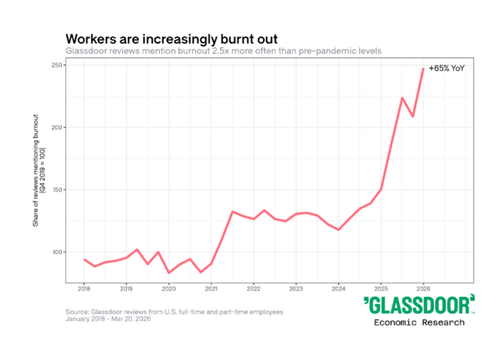
The data from last week is hard to ignore. According to Glassdoor, the workplace climate is burning us out:
Burnout rates are up 65% year-over-year, while employee confidence hit a new record low last month, according to Glassdoor research.
Workers mentioned burnout 2.5 times more in reviews in the first quarter of 2026 than they did before the pandemic in 2019.

This week also brought another exciting moment: our research was featured in Inc., where Marcel Schwantes highlighted one of the study’s core findings about the hidden burnout risk leaders are missing in high performers.