

Our Research
The hidden pattern between workplace stressors, burnout and what happens to visible productivity versus true capacity.
Get the White Paper
What’s inside
Why burnout can remain hidden inside high-performing teams
How burnout changes the way people work, not just how they feel
Why visible activity and sustainable innovation capacity are not the same
Which workplace conditions are most strongly associated with burnout
What these findings mean for leaders navigating performance, change, and AI-enabled work
The Capacity Gap is Structural
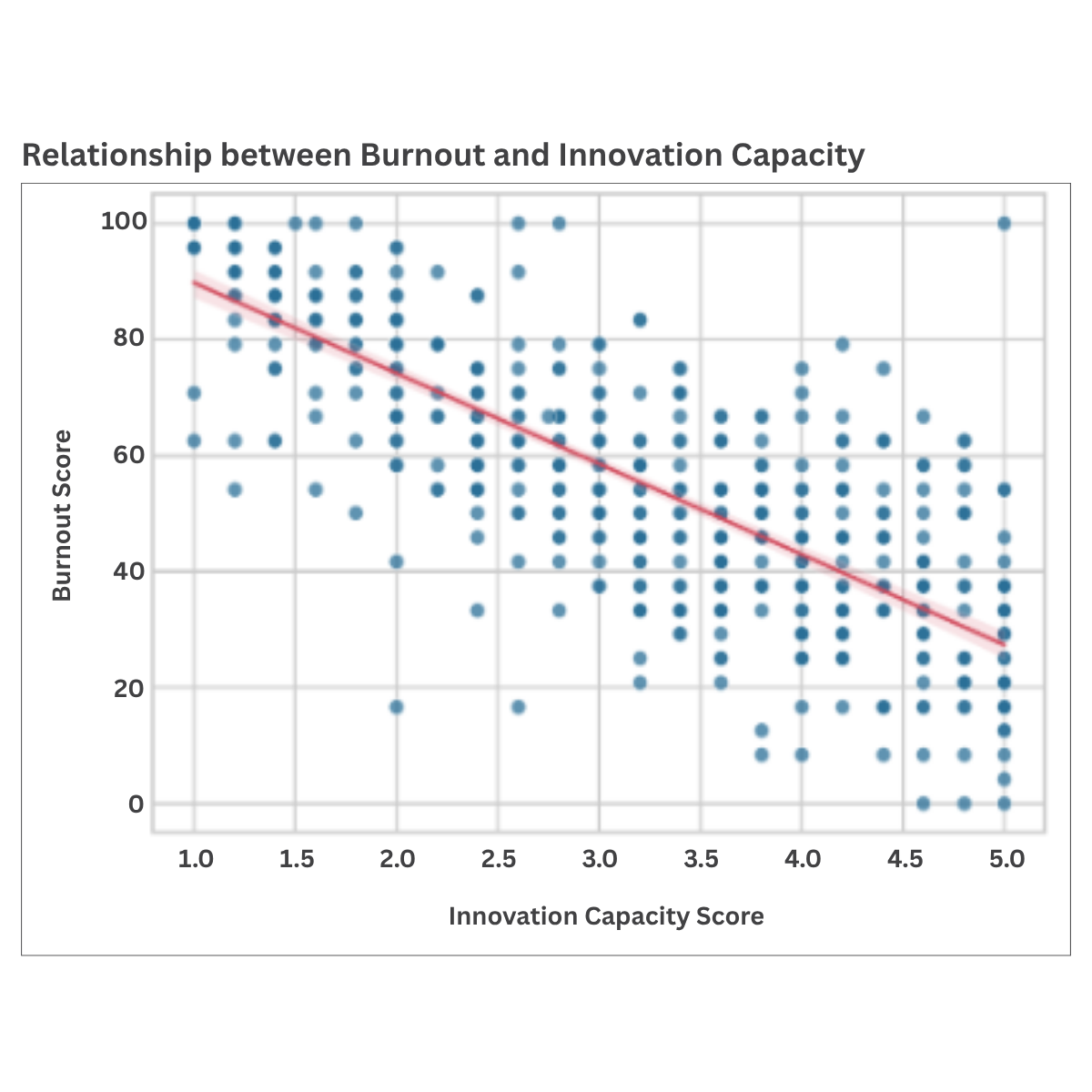
We mapped 33 workplace conditions and found the highest risk factors that associated with innovation capacity decline
“When Burnout Looks Like Productivity: The New Risk to Innovation Capacity” (April 2026)
This white paper explores a pattern many leaders sense but struggle to measure: burnout does not always look like disengagement. In many organizations, employees remain highly active, responsive, and outwardly productive even as burnout intensifies beneath the surface.
Our research found that burnout can coexist with visible innovative activity, while significantly weakening the deeper capacity required for complex thinking, sustained focus, sound judgment, and long-term innovation. In other words, busyness can remain high even as innovation capacity begins to decline.
The paper also identifies the workplace conditions most strongly associated with burnout, including ambiguity, unstable direction, poor communication, fragmented work, and pressure-filled cultural norms. These findings suggest that burnout is not simply the result of too much work. More often, it is a predictable response to how work is organized, communicated, and led.
For leaders, this creates an important distinction: visible effort is not always a reliable signal of healthy performance. Teams may continue generating ideas, moving quickly, and appearing productive while losing the cognitive bandwidth needed for deeper strategic work. That makes burnout not only a human risk, but a business and innovation risk.
Research Spotlight

unBurnt + Center of Health and Business at Bentley University
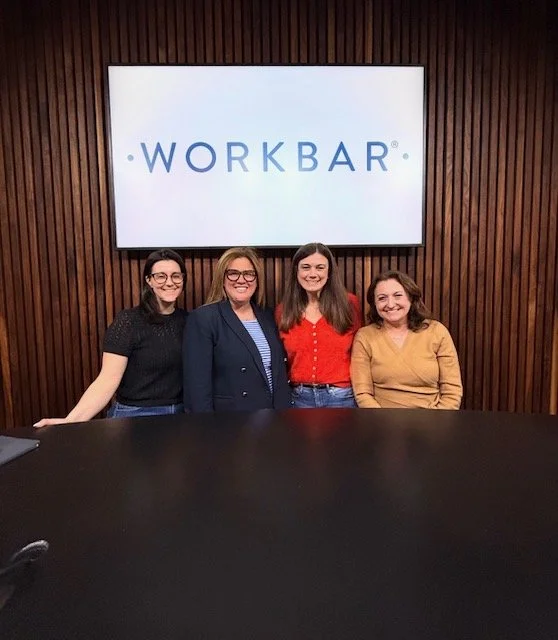
A collaboration that bridges academic rigor and practical application, translating data into actionable strategies for leaders and teams. unBurnt and Bentley University’s Center for Health and Business partnered to examine a growing workplace tension: what happens when employees continue to look productive on the surface, even as the underlying capacity required for strategic thinking, innovation, and sustainable performance begins to erode.
Combining unBurnt’s practical focus on burnout prevention and workplace capacity with Bentley’s academic and research expertise, this collaboration explores burnout as an organizational condition with measurable implications for how people work, lead, and innovate.
This research program is designed to:
Identify and study current state organizational stressors that lead to employee burnout in today’s work environment, including the impact of AI.
Understand and quantify the leading indicators that reduce capacity, innovation, wellbeing and performance.
Test evidence-based micro-habits and leadership interventions.
Provide employers with measurable, defensible insights they can act on.
Key research themes of our first study include:
Drivers of workplace stress and burnout
The relationship between burnout and innovation capacity
Early indicators of burnout before disengagement or turnover
How micro-habits and behavioral interventions influence recovery and resilience
When Execution Quietly Slows

Decision delays, rework, and disengagement rarely appear all at once.
This tool helps leaders surface the costs of execution drag using industry benchmarks for burnout-related turnover and productivity loss.
Industry data suggests burnout can drive meaningful turnover risk within 12 months
Replacement costs often exceed expectations
Productivity loss compounds quietly under sustained overload